

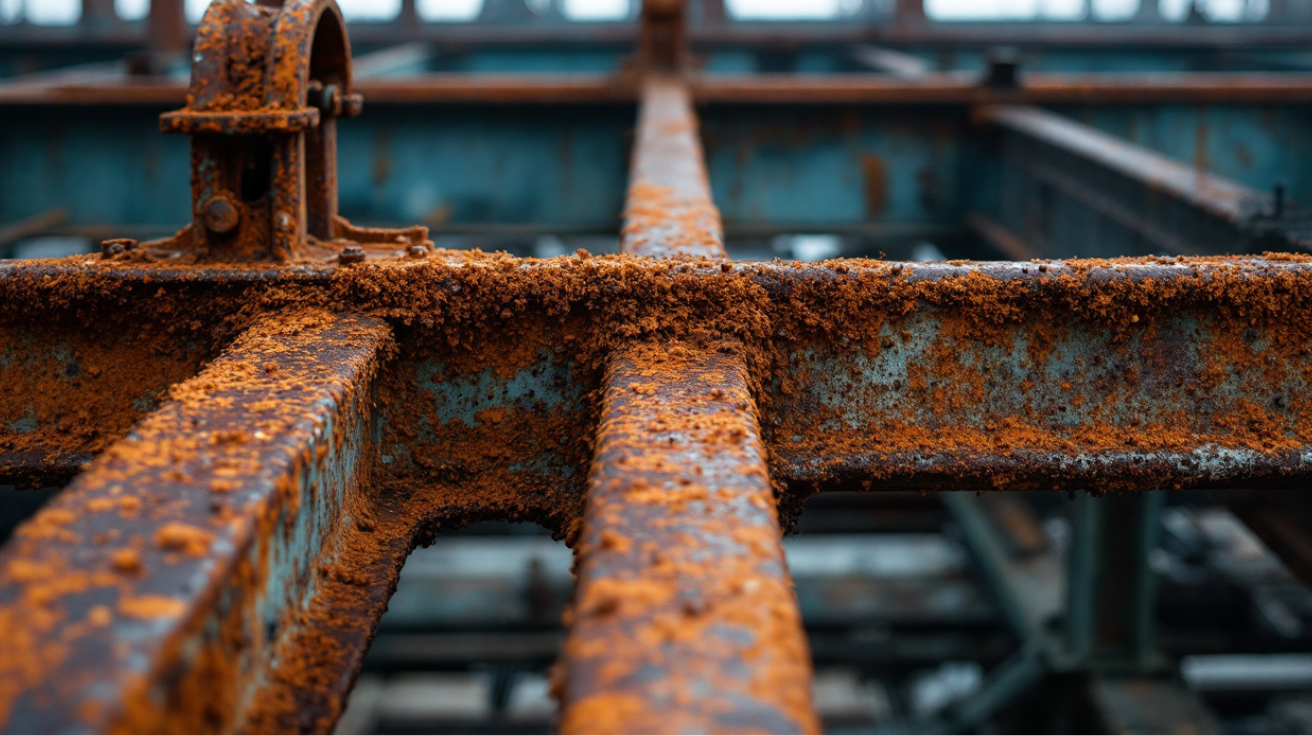
Structural Steel Corrosion: Causes, Mechanisms, and Prevention
Structural steel holds up bridges, buildings, factories, warehouses, and infrastructure projects around the world. Despite impressive strength and durability, it faces one constant enemy: corrosion. Without control, corrosion weakens steel, slashes load capacity, and triggers costly structural failures.
This blog breaks down what causes structural steel corrosion, how it actually works, and practical prevention methods.
What Structural Steel Corrosion Really Means
Structural steel corrosion is an electrochemical process. Iron in steel reacts with oxygen and moisture, creating rust. Once started, this reaction keeps going. Rust slowly eats away at the metal, shrinking its thickness, strength, and overall integrity.
Rust seems harmless initially. Reality hits differently—it swells to nearly six times the volume of the steel it consumes. This expansion creates internal stress, cracking, and surface damage that gets worse over time.
What Triggers Corrosion
Steel needs three things present simultaneously to corrode:
- Moisture (water)
- Oxygen
- Ions (particularly chloride from salt, coastal air, de-icing chemicals)
Combine these three, and corrosion kicks in immediately.
What Makes Corrosion Happen Faster
Corrosion is natural, but certain conditions push it into overdrive:
High Humidity
Air moisture hitting critical levels sends corrosion rates climbing—especially in tropical and coastal zones.
Atmospheric Pollution
Industrial gases, chemicals, and airborne dust mix with moisture, producing hostile conditions that attack steel aggressively.
Skipped Maintenance
Ignoring routine checks allows small rust patches to balloon into major structural damage.
Flawed Design
Designs trapping water, dirt, or debris invite corrosion in particular spots. Poor drainage and ventilation amplify the problem.
Different Metals Touching
Steel contacting another metal with moisture around creates galvanic corrosion. One metal rusts way faster.
Quality Issues
Substandard steel, surface defects, and sloppy welding produce weak spots where corrosion grabs hold quicker.

How Corrosion Actually Happens
Steel corrosion involves electrochemical reactions. Electrons shift between different areas on the metal surface.
Step 1: Anodic Reaction (Oxidation)
Iron sheds electrons and transforms into iron ions: Fe → Fe²⁺ + 2e⁻
Step 2: Cathodic Reaction (Reduction)
Oxygen and water grab those released electrons: O₂ + 2H₂O + 4e⁻ → 4OH⁻
Step 3: Rust Takes Form
Iron ions merge with hydroxide ions, forming iron hydroxide. This converts into hydrated iron oxide—rust (Fe₂O₃·nH₂O).
The rust layer forming is porous and flaky. It offers zero protection. Moisture and oxygen slip through easily, fueling the corrosion cycle.
Different Corrosion Types in Structural Steel
- Uniform Corrosion – Rust spreads evenly across surfaces
- Pitting Corrosion – Small, deep holes appear. Often hidden. Extremely dangerous
- Galvanic Corrosion – Happens when dissimilar metals contact each other
- Crevice Corrosion – Forms in tight spaces where moisture sits trapped
Stopping and Controlling Corrosion
Single methods rarely work long-term. Real protection layers several strategies together.
Protective Coatings (First Line of Defense)
Coatings build a physical wall between steel and corrosive elements.
Paint and Organic Coatings
Multi-layer paint systems (primer, intermediate coat, finish coat) deliver cost-effective protection. Surface prep quality determines how long protection lasts.
Metallic Coatings
Hot-dip galvanizing, thermal metal spraying, and zinc coatings function as sacrificial anodes. Zinc corrodes first, shielding the steel underneath even when the surfaces get scratched.
Cathodic Protection
Steel connects to more reactive metals like zinc or magnesium. These corrode instead of steel, converting steel into the protected cathode.
Used widely in pipelines, ships, offshore structures, and underground foundations.
Environmental Control
Enclosed spaces curb corrosion through ventilation, dehumidifiers, and moisture control systems. No moisture eliminates electrochemical reactions.
Picking the Right Materials
Weathering steel or corrosion-resistant alloys naturally develop stable protective rust layers. This ditches painting requirements in certain outdoor applications.
Intelligent Design Choices
Design decisions heavily influence corrosion risk:
- Skip water-trapping shapes
- Build in effective drainage
- Facilitate air movement
- Create accessible inspection points
Inspection and Maintenance Routines
Regular inspections spot early rust, coating breakdown, moisture accumulation, and structural weakening. Addressing small issues early sidesteps massive repair bills down the road.
Why Prevention Can’t Be Ignored
Neglecting corrosion causes reduced load capacity, structural instability, safety hazards, expensive repairs, premature failure, and diminished asset value.
Severe cases worldwide demonstrate corrosion causing bridge collapses, building failures, and major industrial shutdowns.
Final thoughts
Structural steel corrosion happens naturally—structural failure from corrosion doesn’t have to. Understanding what causes it and how it works, then applying the right combination of coatings, protection systems, smart design, and regular maintenance, extends the steel structure’s life by decades.
Corrosion control goes beyond technical requirements. It’s a long-term investment in durability, cost efficiency, and safety. Equally important is working with a reliable structural steel fabrication company that follows proper material selection, fabrication standards, surface preparation, and quality control practices—ensuring the steel performs as intended throughout its lifecycle.