

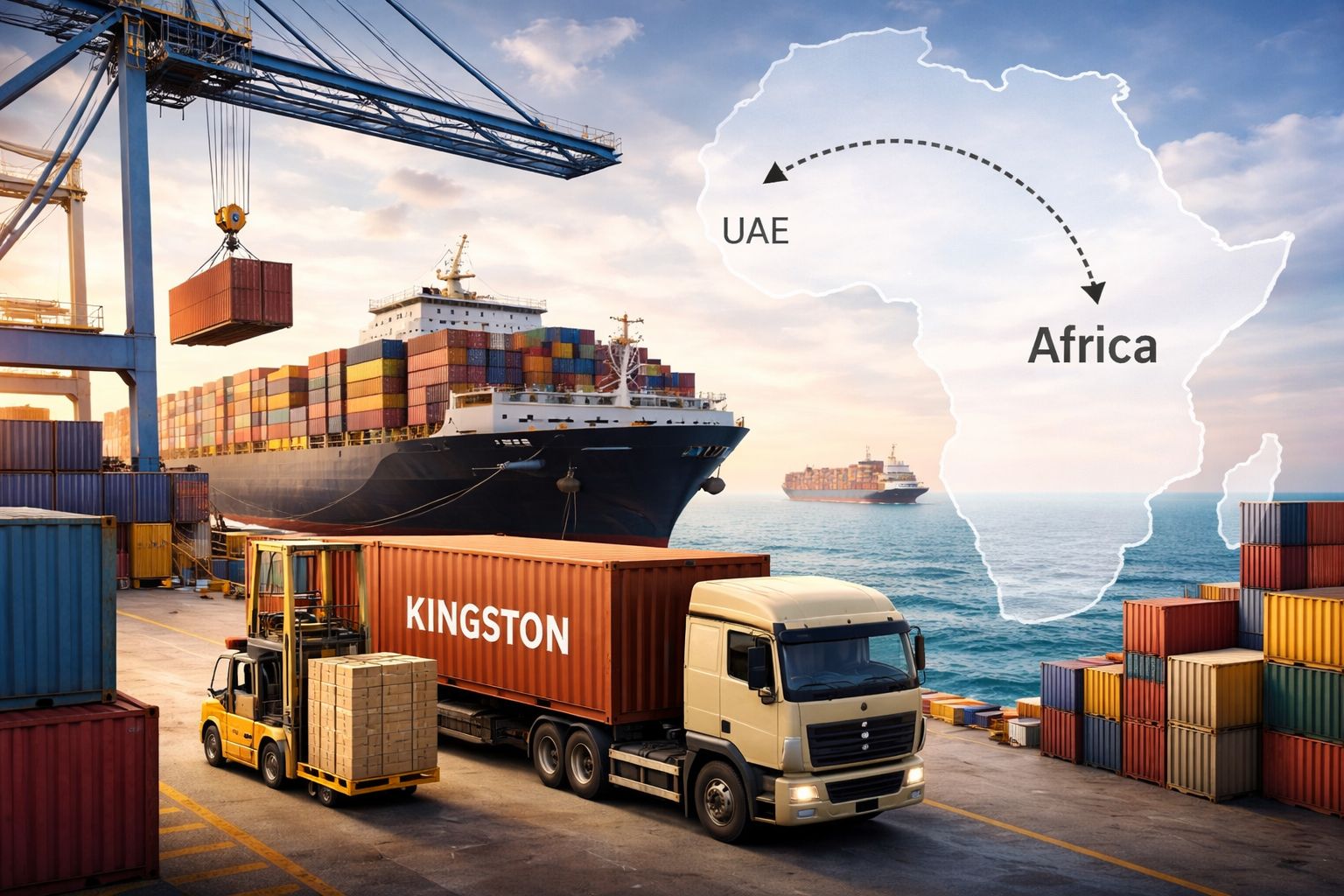
How UAE-Based Steel Fabrication Supports Africa’s Growing Infrastructure Needs
Across Africa, infrastructure delivery in 2026 looks very different from a decade ago. Power plants, logistics hubs, industrial zones, and urban developments are advancing at the same time. That scale puts pressure on supply chains. Materials are no longer judged only on price. They are judged on how quickly they arrive, how accurately they fit, and how reliably they perform on site.
In this environment, UAE-based steel fabrication has become more than a sourcing option. It has become part of how projects are planned and executed. Steel Fabrication Supply from UAE to Africa now supports timelines, quality control, and financing structures that often determine whether large projects move forward or stall.
Strategic Logistics and Reduced Lead Times
On many African projects, the schedule is defined by material availability. Steel delays affect foundations, equipment installation, and commissioning. The UAE’s logistics position directly addresses this risk.
For North and East African markets, fabricated steel shipped from the UAE often arrives weeks earlier than consignments from Europe or Asia. Jebel Ali remains central to this flow, supported by industrial hubs such as the Hamriyah Free Zone where steel can be processed, stored, and re-exported without unnecessary handling.
Logistics development has also moved inland. Trade corridors supported by UAE operators, including the Berbera–Ethiopia route, have improved access for heavy industrial cargo. These routes are practical, not theoretical, and they have made Steel Fabrication Supply from UAE to Africa a realistic option for projects with tight delivery windows.
Modular and Pre-Engineered Steel in Practice
Labour availability, site conditions, and quality consistency continue to shape how projects are built across Africa. Off-site fabrication has become a practical response to these constraints.
UAE fabricators have expanded production of pre-engineered buildings for warehouses, factories, and logistics facilities. These systems are predictable. They install quickly. Performance is known before the steel reaches the site.
Modular steel construction follows the same logic. Frames are fabricated in controlled environments, checked, and shipped as components for assembly on site. In the energy and oil sectors, skid-mounted systems are widely used. These self-contained steel units reduce installation time and simplify complex works at refineries, substations, and offshore facilities.
Through this approach, Steel Fabrication Supply from UAE to Africa delivers engineered systems, not loose materials that require extensive site adaptation.
Quality Standards That Match Project Reality
Large infrastructure projects rarely proceed without external oversight. Lenders, EPC contractors, and insurers all expect verifiable quality systems.
UAE fabrication facilities typically operate under ISO 9001 and ISO 45001 frameworks. These standards align with the documentation, inspection, and traceability requirements applied on internationally funded projects.
Engineering practices have also matured. BIM-based detailing, automated welding, and AI-assisted manufacturing are now standard across many facilities. These methods reduce dimensional errors and material waste, particularly on bridges, power plants, and industrial structures.
Because of this alignment, Steel Fabrication Supply from UAE to Africa integrates smoothly into projects where technical scrutiny is unavoidable.
The “China-Plus-One” Shift in Sourcing
Procurement strategies in Africa are changing. While China remains a major supplier, reliance on a single source is increasingly seen as a risk. Supply chain disruptions and geopolitical uncertainty have accelerated the move toward a “China-Plus-One” approach.
The UAE fits into this model with few compromises. European suppliers may offer advanced technology but often operate with longer lead times. Asian suppliers face extended shipping routes. UAE fabricators sit closer, with most African ports within a 7–10 day shipping range.
Trade frameworks such as the UAE–Kenya CEPA have reduced tariff friction and simplified the movement of industrial goods. As a result, Steel Fabrication Supply from UAE to Africa is now treated as a stable secondary—and often primary—option.
Digital Twins and Remote Support on Site
Specialised steel assembly skills are not always available locally, especially on complex structures. UAE structural steel fabricators have addressed this gap using digital twins and remote support models.
Projects are fully modelled using BIM before fabrication begins. Load paths, connections, and sequencing are reviewed early. During installation, UAE-based engineers can support site teams remotely using digital platforms and augmented reality tools.
This approach reduces rework, improves safety, and limits the need for large specialist teams to be mobilised on site. It is another reason Steel Fabrication Supply from UAE to Africa performs well on technically demanding projects.
Supporting the Energy Transition
Power infrastructure remains one of Africa’s most urgent needs. Grid expansion is slow in many regions, increasing reliance on decentralised and renewable systems.
UAE steel fabrication supports this shift through modular substations, solar mounting structures, and wind energy frameworks. Steel systems are engineered to withstand desert heat, coastal exposure, and tropical conditions.
Low-carbon steel initiatives, including hydrogen-based production, also support sustainability targets now tied to project financing. Through these applications, Steel Fabrication Supply from UAE to Africa contributes directly to energy access and long-term resilience.
Financing as a Delivery Tool
On large projects, how steel is paid for can matter as much as how it is fabricated. UAE export credit mechanisms, including Etihad Export Credit Insurance, allow suppliers to extend deferred payment terms.
Access to 90- to 180-day credit reduces early cash pressure on developers. In high-interest environments, this flexibility can determine procurement decisions and keep projects moving.
Conclusion
Africa’s infrastructure growth depends on delivery certainty. Speed, accuracy, and financial structure all matter. UAE-based steel fabrication now supports these needs in a coordinated way, combining engineering capability, logistics reach, digital tools, and financing support.
By delivering precision-fabricated systems and dependable supply chains, Steel Fabrication Supply from UAE to Africa continues to support industrial expansion, energy development, and long-term infrastructure stability across the continent.