

Why African EPC Contractors Prefer Fabricated Steel from the UAE
Across Africa, major infrastructure projects are reshaping industries and cities. New industrial plants, logistics parks, mining operations, power stations, ports, and commercial developments are creating demand for structural steel on a much larger scale than ever before. But as projects become more ambitious, one challenge continues to surface during procurement: finding a fabrication partner that can deliver consistent quality without disrupting the construction schedule.
For Engineering, Procurement and Construction (EPC) contractors, steel is far more than a construction material. Every fabricated beam, column, platform, or truss becomes part of a carefully planned sequence that affects engineering, installation, commissioning, and project handover. A delay in fabrication or a missing shipment doesn’t simply postpone one activity—it can slow multiple trades working across the site.
This explains why procurement decisions have changed over the years. Instead of focusing only on price, contractors now pay closer attention to reliability, engineering capability, quality assurance, logistics, and long-term project value.
That shift has also increased interest in steel fabrication supply from UAE to Africa. The UAE has developed into one of the region’s strongest engineering and manufacturing hubs, offering modern fabrication facilities, internationally connected ports, and established export systems that support large industrial projects across the African continent.
EPC Contractors Don’t Buy Steel—They Buy Project Confidence
There’s a common misconception that procurement is simply about sourcing steel at the lowest possible cost.
In reality, EPC contractors evaluate suppliers very differently.
Every structural steel package influences dozens of activities that follow. Equipment installation depends on completed steel frames. Mechanical and electrical contractors need access to finished structures before they can begin their work. Inspection schedules, crane operations, and commissioning programmes all rely on fabricated steel arriving exactly when it’s needed.
When fabrication problems appear, the impact spreads quickly. Components may require modification, installation crews remain idle, lifting schedules change, and project milestones begin to move. Even relatively small fabrication errors can create delays that cost significantly more than the original steel package itself.
For this reason, experienced contractors usually ask different questions before awarding a contract.
Can the supplier meet demanding project schedules?
Do they understand complex industrial fabrication?
Can they produce accurate shop drawings and maintain consistent quality throughout production?
Will documentation satisfy consultants, clients, and third-party inspectors?
These questions often matter far more than selecting the lowest quotation.
Why the UAE Has Become a Preferred Fabrication Hub
The UAE’s position as a fabrication and export centre hasn’t happened by chance. Over the past two decades, significant investment has been made in manufacturing capability, logistics infrastructure, and international trade.
Today, engineering, fabrication, inspection, surface treatment, warehousing, and export operations can often be managed through one coordinated supply chain. Instead of moving steel between multiple workshops or suppliers, many projects are completed within integrated industrial facilities before shipment.
For African EPC contractors, this simplifies procurement.
Rather than coordinating several companies responsible for engineering, fabrication, coating, packing, and logistics, a single fabrication partner can manage the process from production to export. Fewer handovers generally mean fewer communication gaps, fewer documentation issues, and better control over delivery schedules.
This integrated model has made steel fabrication supply from UAE to Africa an increasingly practical option for projects where programme certainty is critical.
Reliable Delivery Is Often More Valuable Than the Lowest Price
Most project delays aren’t caused by a lack of steel—they’re caused by steel arriving at the wrong time.
Unlike standard building materials, fabricated structural steel is delivered according to an erection sequence. Columns, rafters, platforms, staircases, and connection assemblies must reach the site in a planned order. If one shipment is delayed, installation teams often cannot proceed with the next stage of construction.
Reliable logistics therefore become part of the engineering strategy rather than simply a transportation issue.
The UAE’s well-established ports and shipping connections with African markets provide contractors with greater visibility over export schedules and cargo movement. More importantly, experienced exporters understand how fabricated steel should be packed, marked, documented, and prepared for international transport to minimise delays once it reaches its destination.
For projects involving mining facilities, industrial plants, logistics hubs, warehouses, or power infrastructure, dependable delivery schedules often provide greater long-term value than marginal savings on procurement costs.
Factory Fabrication Reduces Problems on Site
Construction sites are rarely ideal environments for precision work.
Weather conditions change, access can be restricted, specialist labour may be limited, and project schedules leave little room for unexpected fabrication work.
Modern structural steel fabrication addresses many of these challenges before materials even leave the workshop.
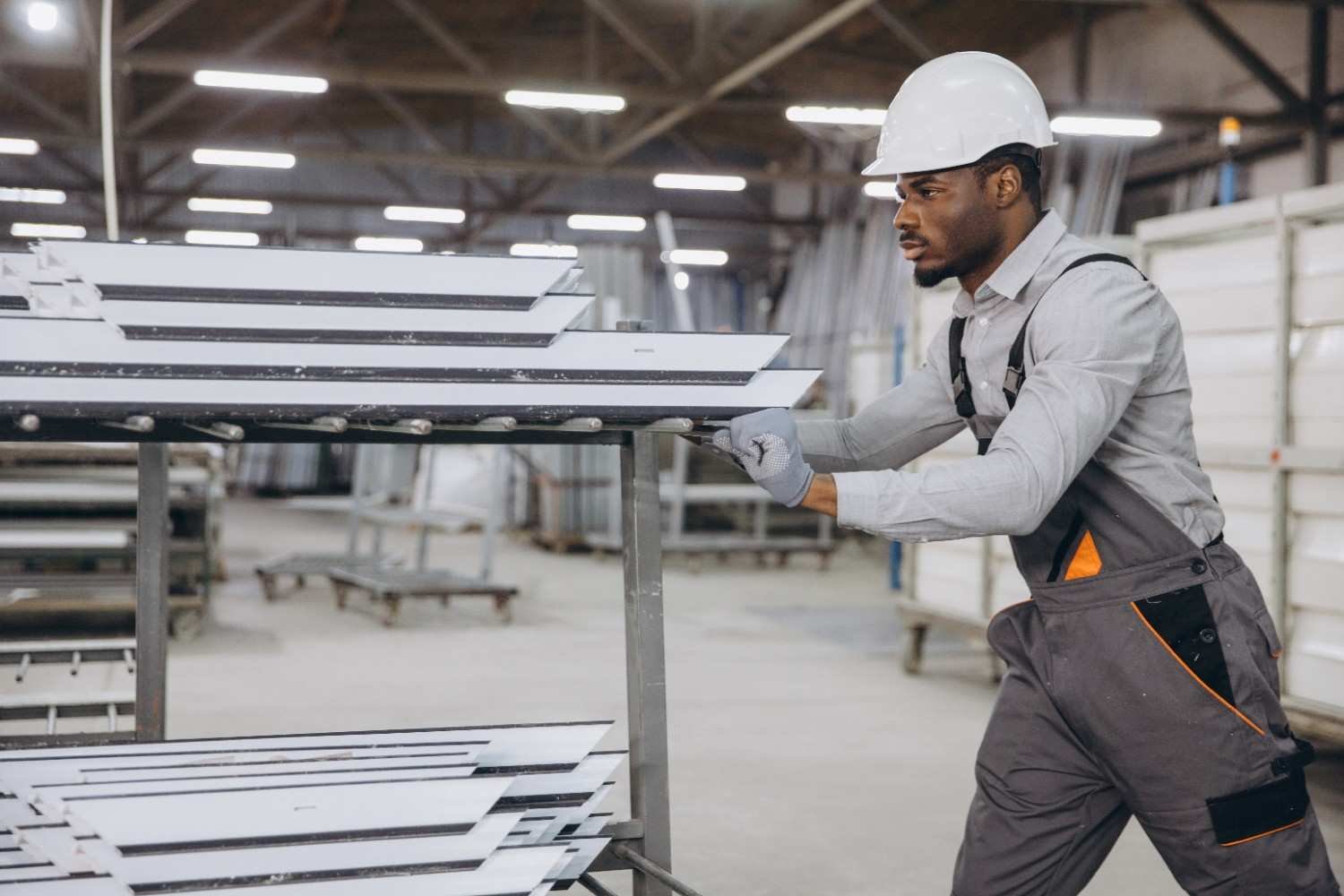
Instead of sending unfinished sections to site, experienced fabricators complete cutting, drilling, welding, dimensional inspections, trial assemblies, and quality checks in controlled factory conditions. Every component is identified, inspected, and prepared before shipment.
For EPC contractors, this changes the nature of work on site.
Rather than spending valuable time correcting fabrication issues or making unexpected modifications, installation teams can focus on assembling pre-engineered components according to the construction programme.
This approach reduces uncertainty, improves productivity, and is one of the reasons steel fabrication supply from UAE to Africa continues to gain momentum across industrial and infrastructure projects.
Quality Starts Long Before Installation
Good steel fabrication isn’t defined only by the finished product—it begins with the systems behind it.
Material traceability, qualified welding procedures, dimensional inspections, non-destructive testing, coating inspections, and documented quality control all contribute to the reliability of a fabricated steel package.
For international EPC projects, these records are just as important as the steel itself. Consultants, third-party inspectors, and project owners frequently require documentation before fabricated components are approved for shipment or installation.
Working with fabrication partners that operate under structured quality management systems helps reduce approval delays while giving contractors greater confidence that every component has been manufactured to specification.
By the time fabricated steel leaves the workshop, it should already be ready—not only for transport, but also for inspection, installation, and long-term performance.
Engineering Support Has Become a Competitive Advantage
Modern infrastructure projects involve far more than manufacturing steel. By the time fabrication begins, engineers, consultants, architects, procurement teams, and construction managers have already invested months coordinating drawings, specifications, and construction schedules.
Any inconsistency between design and fabrication can affect the entire project.
This is why many EPC contractors now prefer working with fabrication partners that contribute during the engineering stage rather than simply manufacturing what appears on the drawings.
Services such as structural detailing, shop drawings, connection design, material optimisation, BIM coordination, and production planning help identify potential issues before steel enters the workshop. Solving these challenges early reduces design revisions, limits material waste, and avoids unnecessary delays during construction.
When engineering and fabrication work together from the beginning, projects generally move through production more smoothly, with fewer surprises during installation.
Looking Beyond the Lowest Steel Price
Every procurement team works within a budget, but experienced EPC contractors know that the lowest steel price does not always produce the lowest project cost.
A fabricated steel package influences almost every stage of construction. If components require modification after arriving on site, the impact extends well beyond fabrication costs. Crane schedules change, installation crews wait for revised materials, subcontractors lose productive time, and critical activities begin to shift.
These indirect costs often exceed the savings achieved through cheaper procurement.
This is why contractors increasingly assess the overall value a supplier brings to the project rather than comparing quotations alone.
Reliable fabrication, accurate engineering, complete documentation, predictable logistics, and consistent quality help reduce unexpected costs throughout construction. For many infrastructure developments, this makes steel fabrication supply from UAE to Africa a practical investment rather than simply another procurement decision.
Built to Perform in Different African Environments
Infrastructure projects across Africa operate under very different environmental conditions.
A logistics warehouse near the coast faces different challenges from a mining facility in central Africa or a power project in arid regions. Corrosion, humidity, dust, high temperatures, and seasonal rainfall all influence how structural steel performs over time.
Because of these varying conditions, protective coating systems are planned during fabrication rather than treated as an afterthought.
Depending on project specifications, fabricated steel may receive surface preparation followed by specialised coating systems such as zinc-rich primers, epoxy coatings, polyurethane finishes, or hot-dip galvanising. Applying these systems under controlled workshop conditions helps achieve more consistent coverage and quality than coating large structural assemblies after installation.
For project owners, the benefit is straightforward: structures that remain durable for longer while reducing maintenance requirements throughout their service life.
What Should EPC Contractors Look for in a Fabrication Partner?
Choosing a fabrication partner is one of the most important procurement decisions on any major project.
While production capacity is important, experienced contractors usually evaluate suppliers from a broader perspective.
Some of the questions worth asking include:
- Does the company have experience delivering industrial and infrastructure projects?
- Are engineering, fabrication, inspection, and logistics managed under one coordinated process?
- Can the supplier provide complete documentation, including material certificates, welding records, inspection reports, and quality assurance documents?
- Does the workshop have the production capability to support large project schedules?
- Has the company successfully managed international exports and heavy project cargo?
- Can fabricated steel be delivered according to the planned erection sequence?
A supplier that can confidently answer these questions often contributes far more to project success than one competing only on price.
Why Experience Still Makes the Biggest Difference
Modern fabrication technology has significantly improved the way structural steel is manufactured, but technology alone does not guarantee successful project delivery. Experience remains one of the most valuable assets in large EPC projects because every project brings its own engineering requirements, construction sequence, logistical constraints, and site conditions.
An experienced fabrication partner understands how decisions made during detailing, manufacturing, inspection, coating, packing, and shipping can influence the entire construction programme. This broader understanding helps minimise coordination issues, reduce unnecessary rework, and improve overall project efficiency from fabrication through installation.
Companies with proven expertise in structural steel fabrication and international project delivery are often better equipped to support steel fabrication supply from UAE to Africa. Beyond manufacturing steel components, they contribute to smoother project execution through reliable engineering support, consistent quality management, comprehensive documentation, and well-coordinated export logistics.
For EPC contractors, choosing an experienced fabrication partner is not simply a procurement decision—it’s an investment in reducing project risk and improving delivery certainty.
Conclusion
Africa’s infrastructure sector continues to expand, bringing larger industrial developments, logistics facilities, mining operations, power projects, and commercial construction across the continent. As these projects grow in complexity, procurement decisions are increasingly focused on long-term project performance rather than material cost alone.
This shift explains the growing demand for steel fabrication supply from UAE to Africa. Contractors are looking for fabrication partners that can provide dependable engineering support, precision manufacturing, structured quality control, export-ready documentation, and reliable logistics—all of which contribute to keeping projects on schedule.
For modern EPC projects, fabricated steel is no longer viewed as just another construction material. It is a critical part of project planning, execution, and overall delivery success. Selecting a fabrication partner with strong engineering capabilities, proven quality systems, and international project experience helps reduce uncertainty, improve coordination, and create a more efficient path from design to final installation.